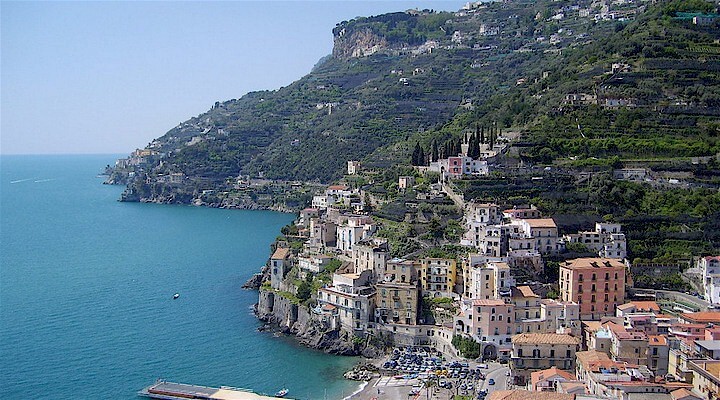
 Amalfi Coast
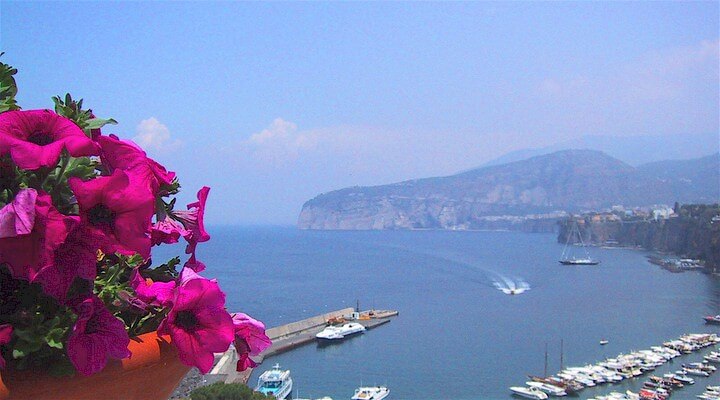 Sorrento Coast
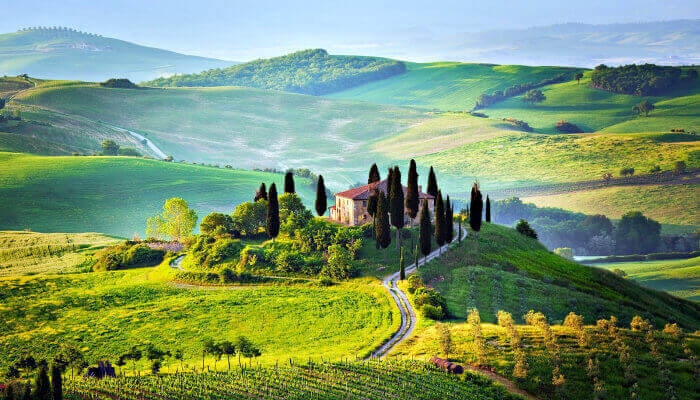 Tuscany
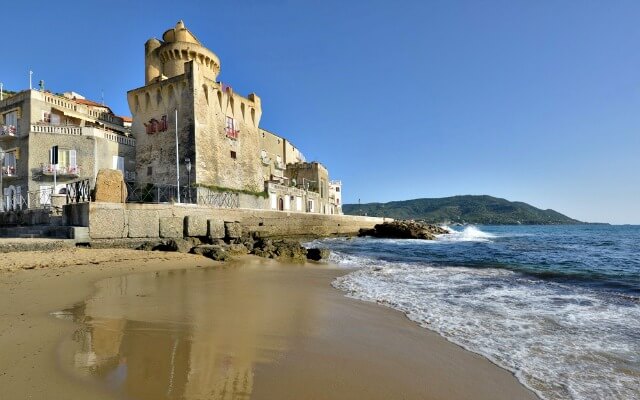 Cilento National Park
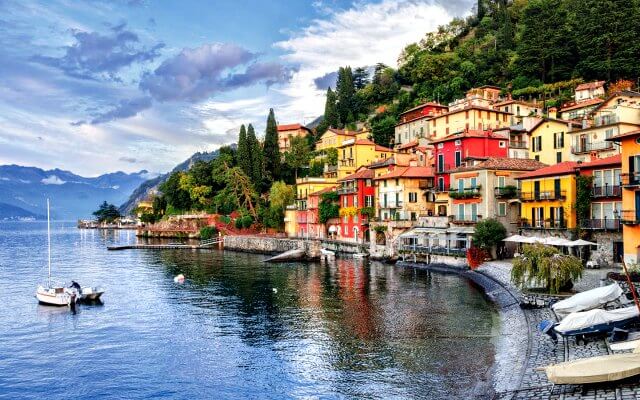 Lake Como
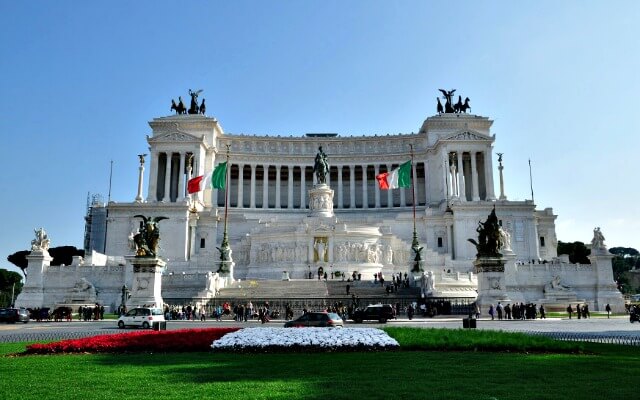 Rome and Latium
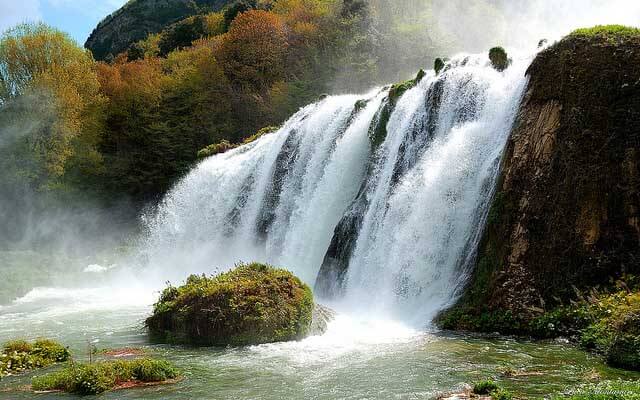 Umbria
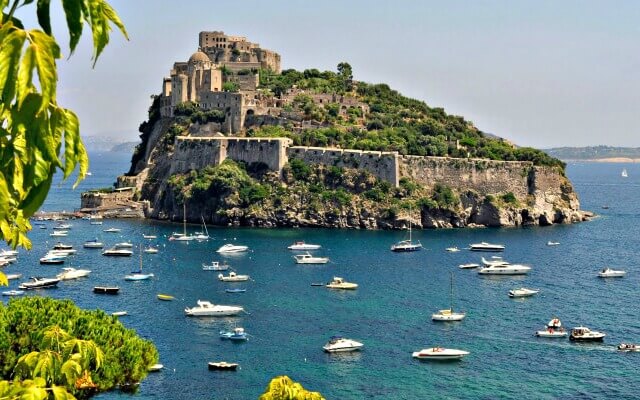 Capri and Ischia
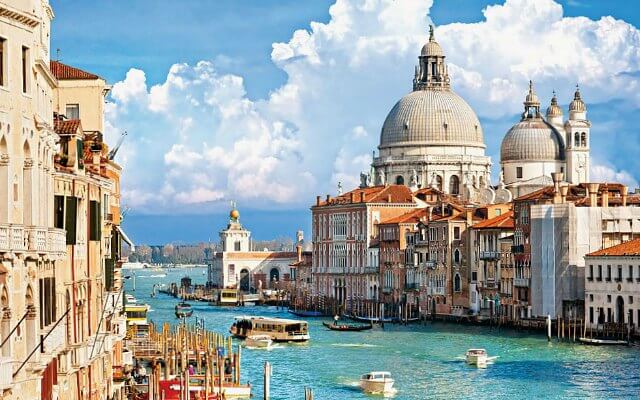 Venice
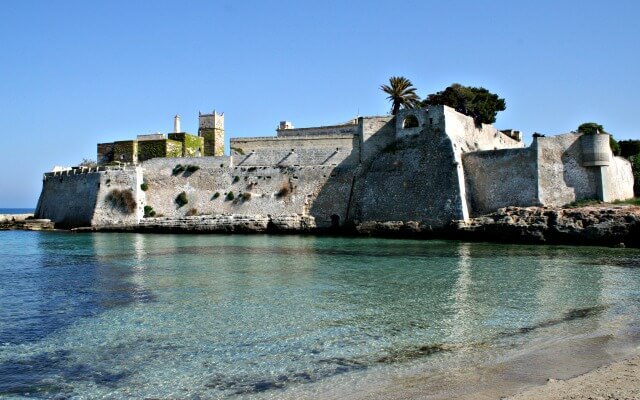 Puglia (Apulia)
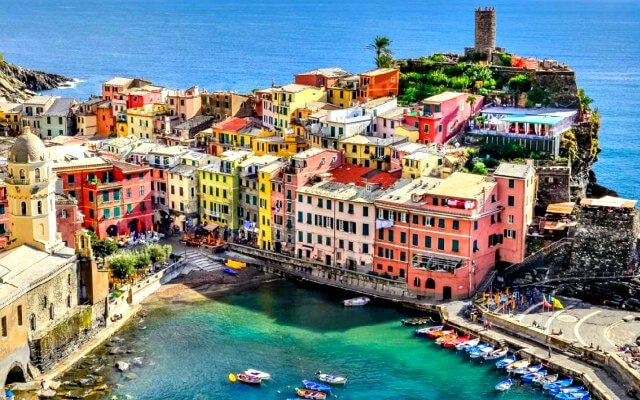 Liguria
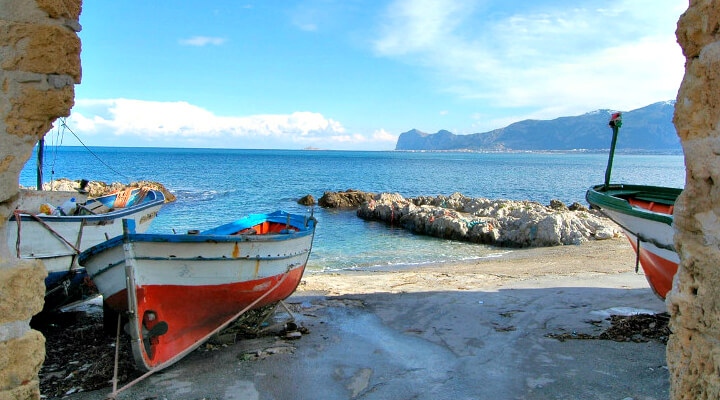 Sicily
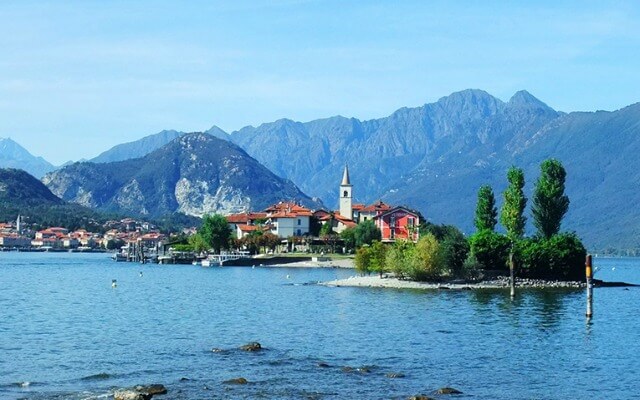 Lake Maggiore
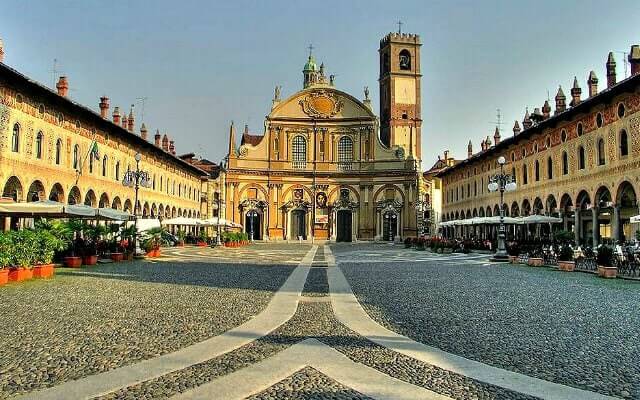 Lombardy
 Sardinia
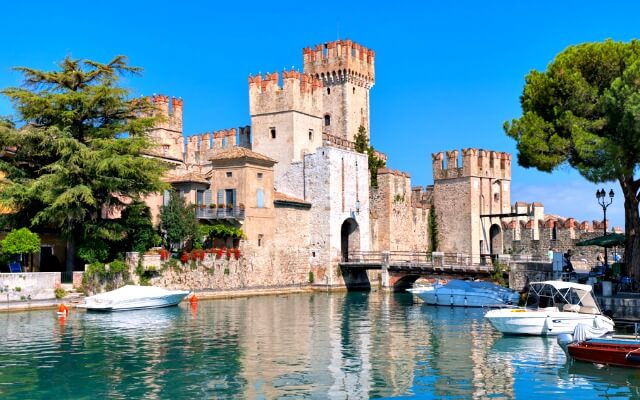 Lake Garda
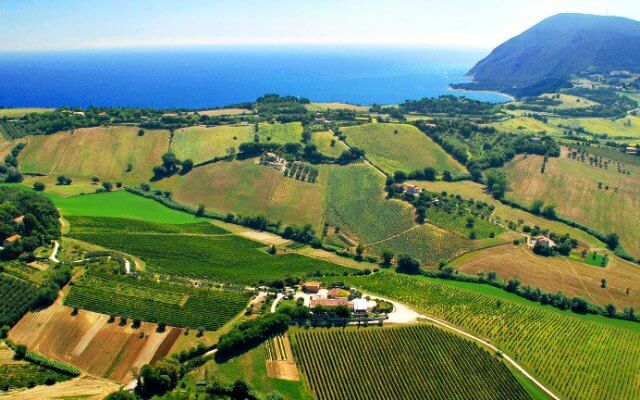 Abruzzo and Marche
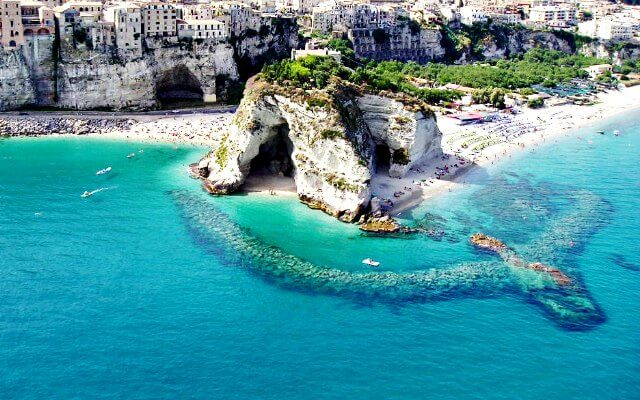 Calabria
Orvieto
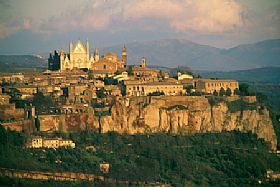
You can't miss Orvieto. Located right off the autostrada about half-way between Rome and Florence, it is a dazzling sight splashed out across a high bluff with the peaks of the Duomo reaching upward from the center. The sun plays on it and makes it sparkle like a beaconing jewel. Even if it wasn't on your tour plan, you can't help but stop to see this dramatic town.
Take the fun funicular up from the station or the parking area to easily reach the historic center. Then make a bee-line for the Gothic Romanesque cathedral that bears a resemblance to the Duomo of Siena with its white and green stripes and its fancy front. This one has majestic mosaics decorating the facade. Don't overlook the beautiful bronze doors sculpted by Emilio Greco. Built between 1290 and 1320, the cathedral contains some real treasures, most notably the San Brizio Chapel with its frescoes by Fra Angelico and the dramatic, detailed scenes of the Last Judgement by Luca Signorelli. They are astonishing and mesmerizing.
Orvieto was established by the Etruscans, as evidenced by the numerous necropoli sprinkled about the area and the artificacts on display in the Archeological Museum. While the residents fought to ward off the colonizing Romans, they were overcome and annexed by Rome in 254 BC. It was an important defensive site, safe on its bluff above high, sheer rock walls, which made it valuable to the Holy Roman Emperors. Orvieto was historically closely tied to the papacy, even housing one of the four papal palaces (the others being in Rome, Viterbo and Avignon). A school of theology was established here in 1227, and St. Thomas Aquinas came and taught there. During the sack of Rome in 1527, Pope Clement VII sought refuge here, ordering the construction of a deep fresh water well to ensure the town's water supply. The result is the architecturally interesting Pozzo di San Patrizio, designed by Antonio da Sangallo the Younger. It's unique design contains a double helix ramped staircase to allow for one-way mule traffic to transport water jugs without obstruction. There are 496 steps down to the chilly depths, so if you're in good shape, it's worth a look.
The former papal palace in Piazza della Repubblica is now the Palazzo del Comune, containing the city offices behind its Renaissance style facade. Next to it is an unusual 10-sided tower that still guards over the piazza. The castle-like Palazzo del Capitano in the piazza of the same name was once the residence and office of the Captain who governed the people. The covered loggia housed markets and meetings. The Albornoz Fortress, built in the 1350s, was a stronghold complete with moat and drawbridge.
There are spectacular views from the city, but below Orvieto lies a labyrinth of caves, tunnels, stairs, cellars and hidden passageways carved into the tuff. A guided tour can take your through the wonder-world of the underground. A little further afield you'll find hot springs, parks, natural areas and a WWF preserve for migratory birds. The area's landscapes are varied and vibrant. Orvieto lies at the cusp of three regions - Umbria, Lazio and Tuscany, thus offering the best of all three. Nearby spots of interest include Viterbo, Todi, Bagnoregio, the Val d'Orcia, Montepulciano, Citta della Pieve, and Lake Bolsena.
The local cuisine is rich with homemade salami, sausage, and pasta, along with forest mushrooms and truffles. Orvieto's white wine is world famous; don't miss the Orvieto Con Gusto festival, an all-out gastronomic festival sponsored by Slow Food. The city also hosts a winter jazz festival and an interesting event, the Palio dell'Oca, a high energy horse race.
Ask our staff about self-catering homes in Orvieto.
Explore nearby towns
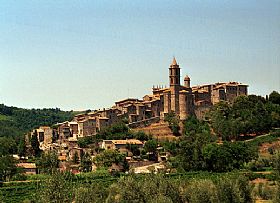
The lovely village of Baschi is a perfectly preserved medieval hill town, well worth a detour to wander the narrow lanes and soak in the Old World atmosphere.
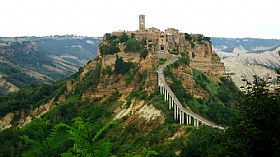
Bagnoregio means "royal bath," alluding to its importance as a thermal spa two millennia ago.
Bagnoregio means "royal bath," alluding to its importance as a thermal spa two millennia ago.
Been there? Done that? Share your experience and tips!
Haven't visited yet? Have questions about Orvieto? Ask them here!